
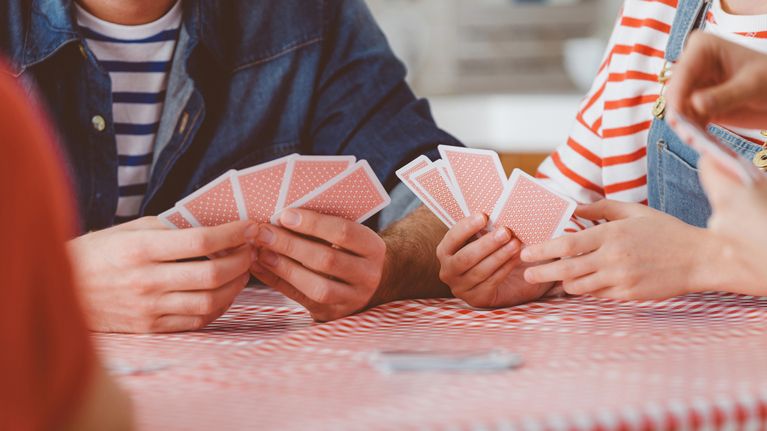
The eternal debate surrounding card games usually boils down to a single fundamental question: does winning depend on sharp intellect or pure chance? Across centuries of human history, card games have served as a primary source of entertainment, psychological warfare, and social bonding. From smoky back rooms hosting high-stakes poker matches to quiet living rooms echoing with the laughter of a casual family game of Uno, cards offer a unique canvas where human strategy collides with the unpredictable nature of a shuffled deck. Understanding the balance between skill and luck across different card genres reveals why certain games captivate competitive minds while others remain beloved pastimes for all ages.
Defining Skill and Luck in Gaming Contexts
Before diving into specific genres, it helps to establish what skill and luck mean within the framework of card gaming. Luck represents the elements entirely outside of a player’s control, most notably the order in which cards appear from a freshly shuffled deck. No matter how brilliant a player is, they cannot alter the mathematical reality of drawing a specific card from a finite set.
Skill, on the other hand, encompasses everything a player can control to influence the outcome. This includes mathematical calculation, probability assessment, psychological reading of opponents, memory retention, resource management, and strategic planning. While luck dictates the hand you are dealt, skill dictates how you play it. Different card genres shift the sliding scale between these two forces dramatically, creating distinct experiences for participants.
Strategic Dominance in Poker and Advantage Games
At the extreme end of the skill spectrum sit poker and advantage-based card games. While a novice can certainly win a single hand of poker purely through sheer luck of the draw, long-term profitability and success in these games rely almost entirely on skill. Professional poker players treat the game as an investment, relying on statistics, expected value, and emotional discipline.
The Role of Probability and Math
Poker players must continuously calculate pot odds, implied odds, and hand equities in real-time. Knowing the exact mathematical probability of completing a flush or a straight gives skilled players a massive edge over casual participants who rely on gut feelings.
Psychology and Bluffing
Beyond mathematics, poker introduces a profound layer of human psychology. Reading body language, recognizing betting patterns, concealing personal tells, and executing well-timed bluffs require immense cognitive effort. Over a large sample size of thousands of hands, luck evaporates, leaving skill as the definitive factor that separates winners from losers.
The Hybrid Nature of Collectible Trading Card Games
Collectible trading card games like Magic The Gathering and Pokémon represent a fascinating hybrid genre where deck-building skill meets the undeniable variance of card draw distribution. These modern competitive games require deep strategic thinking long before a match even begins.
Pre-Game Strategy and Deck Construction
Players spend countless hours designing and optimizing their decks, selecting card synergies, and calculating mana curves to maximize efficiency. This phase is pure intellectual strategy. Building a balanced deck requires a deep understanding of the competitive meta and probability curves.
In-Game Variance and Adaptability
Once the match starts, luck takes the wheel regarding which cards arrive in your hand each turn. A player might build the greatest deck in the world, but if they suffer from poor draw variance, they can still lose to a lesser opponent. Success in trading card games depends on a player’s ability to minimize the impact of bad luck through optimal tactical decision-making and efficient resource allocation.
Pure Entertainment in Casual and Family Card Games
Moving further down the spectrum toward the realm of pure chance, we find casual family card games such as Old Maid, Crazy Eights, and War. These games are explicitly designed to minimize complex strategy so that participants of any age can pick up the rules in minutes.
In a game like War, skill is practically nonexistent. Players turn over top cards simultaneously, and the higher card wins the round. The outcome is determined entirely before the cards are even dealt, based strictly on the initial shuffle. These games thrive not on competitive depth, but on accessibility, fast pacing, and lighthearted fun. They allow groups to socialize without the mental fatigue associated with heavy strategic calculation.
Trick-Taking Classics: Balancing Memory and Distribution
Trick-taking games like Bridge, Spades, and Euchre occupy a unique middle ground where skill and luck achieve a fascinating equilibrium. These games require partnership coordination, careful card tracking, and tactical bidding.
Memory and Inference
Because players can see only their own hands and the cards played in previous tricks, they must use deduction and memory to infer what cards remain in circulation. Remembering which high cards have already been played allows skilled participants to manipulate the board and secure victory.
Overcoming Bad Deals
Even if a player receives a sub-par hand devoid of high-ranking cards, skilled bidding and tactical cooperation with a partner can salvage points and turn the tide against opponents holding superior cards. This dynamic proves that while the initial deal involves luck, the execution heavily rewards strategic mastery.
Frequently Asked Questions
Can skill completely eliminate luck in long-term poker play?
While skill cannot eliminate luck in a single hand or short tournament, it completely neutralizes luck over a large sample size of thousands of hands, which is why professional players consistently outperform amateurs over the course of a career.
Why do some pure luck games remain popular despite having no strategy?
Games based purely on luck appeal to players seeking relaxation and low-stress socialization, allowing participants to enjoy the tactile experience of playing cards without mental exhaustion.
How do game designers balance luck and skill in modern card games?
Game designers often integrate mechanics like drafting, resource management, and multiple paths to victory to ensure that skilled players retain an edge while still maintaining enough variance to keep matches exciting.
Are collectible trading card games considered professional sports?
Yes, major trading card games feature multi-million-dollar competitive circuits with professional players, rigorous rules, and complex meta-analyses comparable to traditional esports and chess tournaments.
What is the most skill-intensive card game in existence?
Contract Bridge is widely considered by mathematicians and game theorists to be one of the most skill-intensive card games due to its complex bidding systems, deep inferential reasoning, and partnership dynamics.
How does card randomization impact the replay value of a game?
Randomization ensures that no two matches are ever identical, forcing players to constantly adapt their strategies on the fly rather than relying on memorized scripts, which drastically increases long-term replayability.